“The question is not whether Chandigarh should have rules. It is how those rules should serve the people for whom Chandigarh was planned.”
Chandigarh is rightly regarded as a city where planning, architectural discipline, and public administration work in harmony. But a well-planned city must fundamentally remain a humane city. A home is not merely a plotted asset governed by mechanical controls—it is where elderly parents seek safety, children grow up, and citizens spend their lives with dignity.
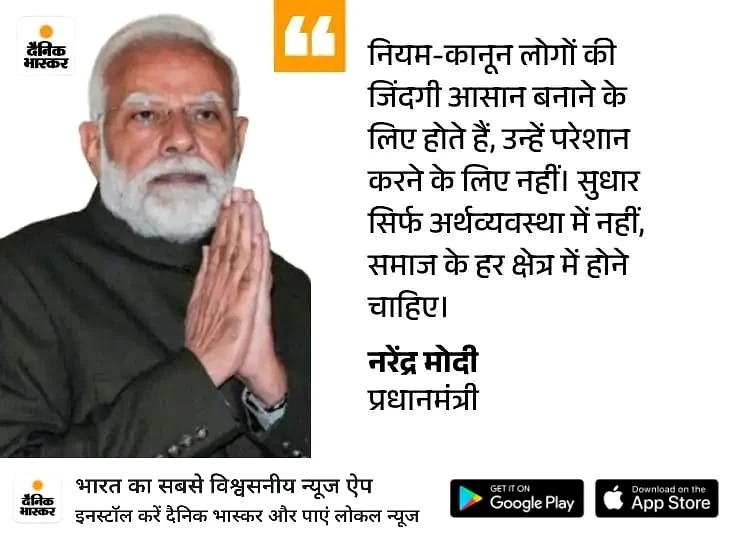
Prime Minister Narendra Modi has repeatedly articulated the transformative national governance objective of Ease of Living and a responsive, humane administration.
In February 2025, the Ministry of Personnel, Public Grievances & Pensions officially described the Prime Minister's vision as one of “humane and citizen-centric administration”, particularly emphasizing dignity and ease of living (Press Information Bureau). This principle carries an essential, irreversible mandate for local urban administration:
⚖️ The Administrative Principle
Rules are necessary. Planning controls are necessary. Building standards are necessary.
However, the mere existence of a rule must not automatically become a justification for imposing the harshest available consequence in every single case. Good governance asks: What is the purpose of the rule, what harm has actually occurred, and what is the least burdensome lawful method of securing compliance?
This distinction becomes paramount where alleged deviations are minor, non-structural, capable of regularisation, do not encroach upon public land, and are motivated by genuine residential needs such as elderly safety, monsoon/heat protection, privacy, or accessibility.
The Chandigarh regulatory framework possesses a legitimate public purpose—empowering authorities under Section 4 of the Capital of Punjab (Development and Regulation) Act, 1952 to issue directions concerning architectural features, walls, fences, and structural treatments.
While these planning powers exist for proper development and must be respected, the statutory framework itself demonstrates that enforcement was never designed to operate without robust procedural safeguards.
For example, Section 8-A of the 1952 Act deals with the severe consequence of resumption and property forfeiture for breach of transfer conditions. Crucially, the statute expressly mandates a show-cause opportunity and a reasonable opportunity of hearing before an order of resumption can ever be contemplated.
🏛️ The Core Legal Distinction
A regulatory deviation and the ultimate consequence of losing one's property are not conceptually the same thing. The more serious the consequence, the greater the legal necessity for careful examination of the nature of the violation, the citizen's explanation, the possibility of regularisation, actual public injury, and the proportionality of the proposed action. That is the rule of law applied with constitutional discipline.
The law itself contains express space for reasoned flexibility. Rule 19 of the Chandigarh Estate Rules, 2007 explicitly establishes the “Power to Relax”, providing that the Administrator, UT Chandigarh, may relax all or any provisions of the Rules in writing, in the public interest and in exceptional circumstances.
The existence of Rule 19 demonstrates that the statutory framework itself recognises that rigid, mechanical application of a rule is not appropriate in every circumstance. Furthermore, Chandigarh’s own administrative history provides a decisive practical lesson:
🎖️ The Army Welfare Housing Society (AWHO Sector 47-C) Precedent
In relation to the residential flats of AWHO, Sector 47-C, the Chandigarh Administration exercised its powers under Section 4 of the 1952 Act to permit and compound several practical modifications: temporary lightweight sunshades, sliding/openable steel grills in verandahs, minor internal alterations, and specified boundary-wall grills.
While that notification was specifically directed to AWHO, its institutional significance is monumental: Chandigarh’s regulatory administration has itself recognized that need-based modifications can be addressed through permission, relaxation, and compounding rather than through a purely punitive approach.
For an elderly resident, a balcony grill is not an architectural statement—it is a life-saving safety measure.
For a family living through Chandigarh's extreme summer temperatures and heavy monsoons, a lightweight fiber sunshade is not an attempt to disrupt the city's heritage—it is basic protection from rain and scorching heat. For a woman living alone, a security grill represents a vital shield of safety. For a mobility-impaired resident, a small ramp or railing makes the difference between independent living and total dependency.
⚖️ Constitutional Values: Article 21
Under Article 21 of the Indian Constitution, the protection of life and personal liberty is not merely about animal survival. Landmark jurisprudence (Maneka Gandhi v. Union of India, Justice K.S. Puttaswamy v. Union of India) guarantees the right to live with human dignity and personal autonomy within the home. Urban regulation cannot be viewed solely through the narrow lens of bricks, mortar, and elevations—the citizen living behind those walls must remain visible to the administration.
A citizen-centric administration does not ask only: “Has there been a technical deviation?” It evaluates the holistic constitutional reality through 9 core inquiries:
1. Nature & Extent
What is the exact physical nature and measurement of the deviation?
2. Structural Safety
Does the modification compromise load-bearing structural integrity?
3. Public Land Encroachment
Does it occupy Government land, or is it confined entirely within private premises?
4. Streetscape Impact
Does it materially or adversely alter the planned public streetscape?
5. Neighbour Inconvenience
Does it infringe upon light, ventilation, or rights of adjoining residents?
6. Reversibility
Can the alteration be demounted or reversed without permanent damage?
7. Compounding Route
Can the item be compounded or regularised under existing policy frameworks?
8. Genuine Residential Need
Was it installed for safety, weather protection, age, or disability?
9. Proportionality
Is the proposed consequence proportionate to the actual impact?
A resident receiving a notice should not feel that the administration has become an immediate adversary. Rational administration demands clear differentiation between:
Commercial Misuse vs. Genuine Residential Modification
Commercial exploitation of residential premises stands on an entirely different legal footing than a resident adding a protective rain shade or safety grill.
Structural Danger vs. Non-Structural Alteration
Modifications that threaten building stability require urgent engineering remedies, whereas lightweight aesthetic or safety fixtures require proportionate regularisation.
Public Land Encroachment vs. Internal Plot Works
Grabbing public municipal land cannot be equated with an alteration strictly confined within the registered allottee's four boundaries.
Substantial Violation vs. Minor Technical Deviation
Treating minor, harmless technical deviations identically to major illegal constructions breeds avoidable litigation and administrative burden.
The success of PM Modi's governance reform is experienced not in high-level policy documents, but at the counter where an ordinary citizen interacts with an officer. A truly citizen-centric Estate Office implements:
1. Clear Identification of Violations
Every notice must clearly cite the precise physical deviation, its statutory provision, and photographs rather than vague boilerplate phrases.
2. Meaningful Differentiation
Minor and major deviations are categorized systematically with distinct, transparent enforcement protocols.
3. Proactive Compounding Guidance
Where the law permits regularisation or compounding, the notice must explicitly communicate the compounding fee formula and timeline.
4. Meaningful Personal Hearing
Hearings must be genuine opportunities to present structural certificates and personal circumstances, with minutes properly recorded.
5. Reasoned Speaking Orders
Orders must show that the officer considered the citizen’s reply and evidence, adhering to Section 8-A statutory standards.
6. Consistency Across Sectors
Equal treatment across all housing sectors and societies eliminates allegations of selective or arbitrary enforcement.
7. Human Consideration for the Vulnerable
Special procedural empathy and adequate cure periods for senior citizens, widows, disabled residents, and defence personnel.
⚖️ EXECUTIVE ADMINISTRATIVE CHECKLIST
The 10-Point Constitutional “Ease of Living” Test
Before initiating or continuing punitive action or issuing resumption threats under Section 8-A, the authority should apply this 10-point test:
✓
1. Legitimate Planning Objective
What exact planning or architectural purpose does the enforced rule protect?
✓
2. Actual Public Injury
What tangible public harm or streetscape damage has the modification caused?
✓
3. Structural Safety Inspection
Has a qualified structural engineer certified whether the change is safe?
✓
4. Public Land Encroachment
Is the alteration strictly contained within the registered plot boundary?
✓
5. Impact on Neighbours
Does the structure adversely affect the light, air, or privacy of adjoining residents?
✓
6. Lawful Compounding Route
Can the item be compounded under Section 4 or Rule 19 relaxation powers?
✓
7. Proportionality of Consequence
Is the proposed penalty or threat proportionate to the physical deviation?
✓
8. Genuine Human Circumstances
Are age, physical disability, personal security, or weather defense relevant factors?
✓
9. Meaningful Opportunity to Explain
Has the resident been given a personal hearing with documented minutes?
✓
10. Consideration in Final Order
Does the final order contain reasoned findings addressing the citizen's reply?
1. How can the idea of “Ease of Living” apply to the Chandigarh Estate Office?
It translates into practical administrative principles such as simpler procedures, clear notices, meaningful hearings, reasoned decisions, avoidance of unnecessary paperwork, and proportionate responses to different categories of violations rather than immediate threats of resumption.
2. What is the role of Section 4 of the 1952 Act?
Section 4 of the Capital of Punjab (Development and Regulation) Act, 1952 empowers the Central Government or Chief Administrator to issue directions concerning specified architectural treatment and erection of buildings. It is a power to issue directions, not merely a punitive instrument.
3. What is the significance of Section 8-A?
Section 8-A provides for resumption and forfeiture in specified cases involving breach of transfer conditions. It is a serious statutory consequence and incorporates show-cause and hearing requirements before such an order can be made.
4. Does Rule 19 permit relaxation of the Chandigarh Estate Rules?
Yes. Rule 19 of the Chandigarh Estate Rules, 2007 provides that the Administrator may relax all or any provisions of the Rules for reasons recorded in writing, in the public interest and in exceptional circumstances.
5. Are all minor residential alterations automatically compoundable?
No. The legal treatment depends upon applicable regulations and individual facts. However, Chandigarh's own administrative record (such as AWHO Sector 47-C) contains documented precedents where need-based modifications like sunshades, verandah grills, and minor internal changes were compounded.
6. What should a resident do after receiving a building notice?
The resident should examine the precise allegation, obtain relevant records, respond within the prescribed period, explain factual circumstances, identify applicable regularisation or compounding provisions, and request a meaningful personal hearing.
7. Does citizen-centric administration mean building rules should be ignored?
No. A genuinely citizen-centric approach balances planning discipline + human dignity, ensuring enforcement is rational, proportionate, transparent, and responsive.
8. Why is a proportionate approach important?
Because structural safety hazards, commercial misuse, and minor non-structural residential safety modifications cannot be mechanically treated as identical merely because each technically involves a deviation.
⚖️
A Final Constitutional Appeal
“Chandigarh does not need weaker rules. It needs strong rules administered with a human face.
It does not need less planning. It needs planning that remembers the people who actually live within that plan.
The finest form of public authority is authority that can enforce the law firmly while still making the citizen feel that the State has heard him.”